Is a wool pillow worth it, and how do you choose one?
Updated .
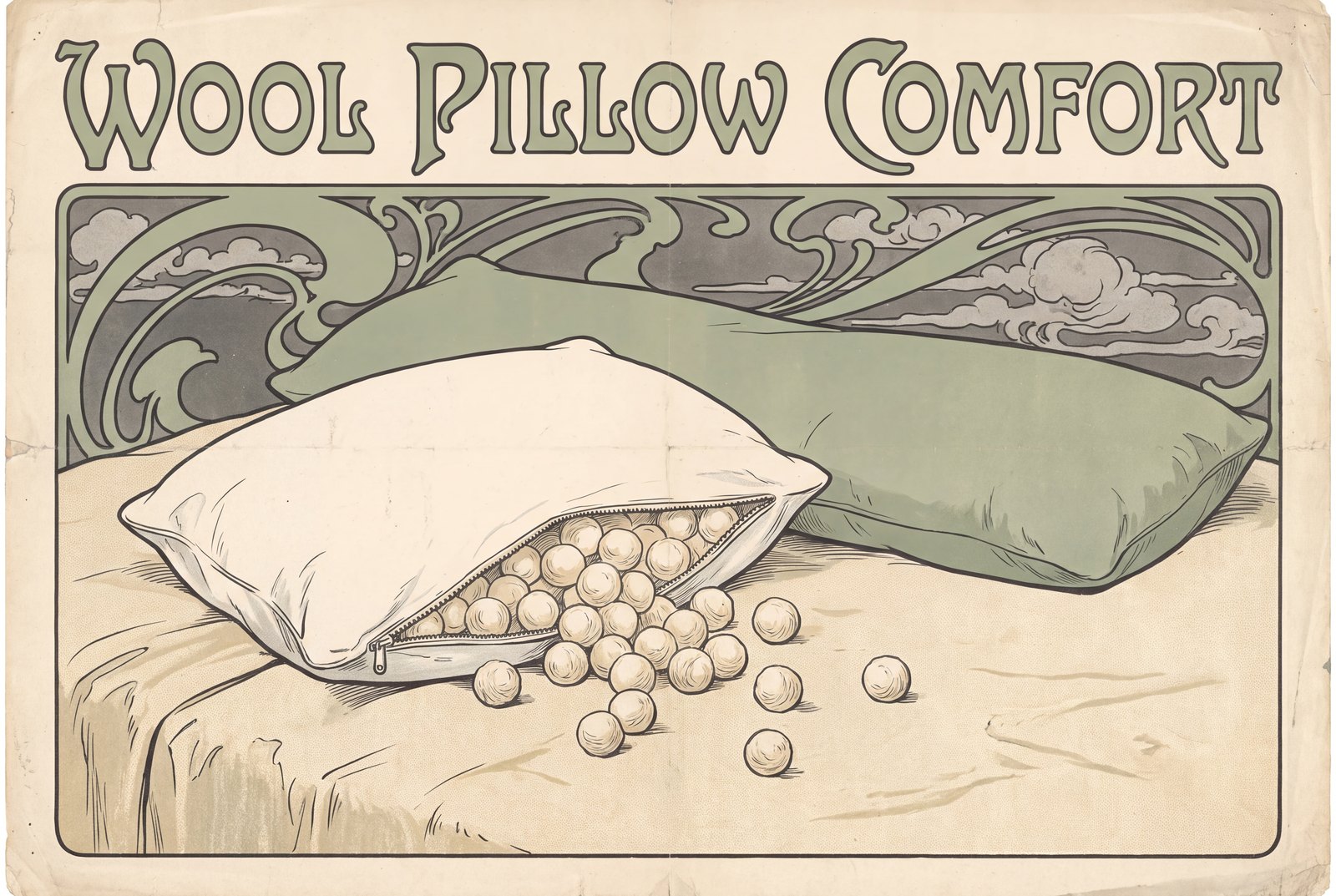
A wool pillow gives your head a cooler surface and a height you can tune. The fill is sheep's wool in a cotton case, sold in the same 20 by 26 inch standard size as any American bed pillow, and one Michigan mill puts 1.6 pounds of wool in that size (Frankenmuth Woolen Mill). That weight sets how tall the pillow sits, so a buyer can match it to their shoulders and sleeping position.
Short answer: A wool pillow suits you if you sleep warm, want a natural fill and can live with limited washing. Wool can absorb up to 35% of its weight in moisture vapor before it feels wet (Woolmark). It takes up the damp your skin gives off, and the heat leaves with it, which is why a wool pillow can sleep cooler. The fill settles in its first months, and most sellers keep it out of the washer. If you are unsure what height you need, buy a zippered pillow so you can adjust the wool.
This guide is for: people in the United States choosing a wool bed pillow or wool body pillow, and anyone deciding whether wool fill is worth paying more for than polyester or down.
Key Takeaways
Three points carry most of this guide: how much wool a pillow holds, how to clean it, and what the sleep research does and does not show.
- Fill weight tells you height. Holy Lamb's natural wool standard pillow comes in three fills, from 25 to 33 ounces of wool (Natural Linens), and a heavier fill sits taller and firmer.
- Most fill stays dry. Of 8 seller pages we read, 5 limited care to spot cleaning, sun and air, or washing the cover only. Warm, soapy water and agitation are how feltmakers felt wool on purpose (Fiberarts).
- The sleep research is about fabric, not pillows. A University of Sydney trial of 17 adults tested sleepwear and bedding (Nature and Science of Sleep), and we found no trial that tested a pillow on its own.
Wool pillows at a glance
Every cell restates a wool pillow maker's own page; the 6 pages were read on October 7, 2026.
| Wool pillow | Certificate number | Wool refill | Trial | Warranty | Tally |
|---|---|---|---|---|---|
| American Blossom Linens Natural cotton pillow with wool filling | Says nothing | Extra 8 or 16 oz of wool sold | Returns up to 2 years, used | Says nothing | 2 / 4 |
| Holy Lamb Organics Wool-Filled Bed Pillow | GOTS and OEKO-TEX named, no number | Says nothing | Returns unused only, 30 days | Says nothing | 0 / 4 |
| Naturepedic Organic Wool Pillow | GOTS via Control Union, no number | Says nothing | 30 nights | 1-year limited warranty | 2 / 4 |
| Sachi Organics Wool Pillow | Says nothing | Wool refill sold by the half pound | Returns unused only, 30 days | Says nothing | 1 / 4 |
| Turmerry Wool Pillow | Says nothing | Says nothing | Returns unused only, 120 days | 1-year limited warranty | 1 / 4 |
| Wool Bedding (Frankenmuth Woolen Mill) Wool Pillow | Says nothing | Says nothing | Returns unused only, 7 days | 1-year warranty | 1 / 4 |
Editor's picks
All 6 wool pillows were read the same way. A place goes to the pillow whose maker publishes the most of the 4 points listed, if that comes to at least 2; where makers tie, each earns one, set out alphabetically rather than in an order of merit.
- A certificate number in print.
- Extra wool on sale.
- Accepts a return after nights of real use.
- Puts a number of years on the wool pillow, as lifespan or warranty.
- American Blossom Linens Natural cotton pillow with wool filling: 2 of 4, Extra 8 or 16 oz of wool sold; Returns up to 2 years, used.
- Naturepedic Organic Wool Pillow: 2 of 4, 30 nights; 1-year limited warranty.
Earning a place means the maker says more, not that the wool is finer. Each pillow here was bought and handled, but none was weighed or measured for this guide.
On This Page
Each section below answers one question a person buying a wool pillow tends to ask, in the order you would likely meet them while shopping.
What is inside a wool pillow?
Wool fill comes as batting layers or loose balls, wrapped in a cotton case, and the build decides how firm it feels and whether you can adjust it.
There are two main builds. The first stacks layers of carded wool batting inside a sewn case, which gives a smooth, even surface you cannot change later. Holy Lamb Organics sells its batting pillow in three thickness options and marks it spot clean only (Holy Lamb Organics). The second puts loose balls of wool behind a zipper, so you can pull wool out or add more. American Blossom Linens sells extra wool in 8-ounce bags for exactly that (American Blossom Linens).
The case is usually cotton. When a page says organic, check whether it names a certification for the finished pillow or only calls the cotton organic. A seller that has certified the whole product will usually say so in plain words. If the page only mentions an organic cotton cover, the wool inside may be conventional. That is not a flaw. It is simply worth knowing which one is being paid for. Our page on what wool fill is explains how fleece becomes fill.
Loose fill and batting also feel different. Batting feels flatter and more even. Holy Lamb describes its zippered wool puffs as close to down in feel, but with enough substance to take a shape and hold it (Holy Lamb Organics). Which suits a given sleeper comes down to how much push-back they like under the head, and that only becomes clear after a week or two of sleeping on it.
How much wool fill should a standard pillow have?
Sellers publish fill weight in ounces or pounds, and it is the best guide you have: more wool means a taller, firmer pillow and a higher price.
Fill weight is the one number that best predicts how tall and firm a wool pillow will feel, and most sellers publish it. The table shows what each seller's own page states, listed alphabetically.
| Seller (page read) | Standard | Queen (20 x 30 in) | King (20 x 36 in) |
|---|---|---|---|
| American Blossom Linens | 30 oz | not listed | 40 oz |
| Frankenmuth Woolen Mill | 1.6 lb | 2 lb | 2.8 lb |
| Holy Lamb Organics, via a retailer | 25, 29 or 33 oz (20 x 25 in) | 31 or 35 oz | not read |
Converted to ounces, the heaviest standard fill in the table is about a third heavier than the lightest. A heavier fill gives more height and more firmness, and it also means you are paying for more wool. Size matters too, because a queen or king case needs more wool to reach the same height, which is why the weights climb across each row. If a page gives a firmness word but no weight, ask for the weight before you buy. "Medium" means different things to different makers. The weight is the only fair way to compare them. The last section of this guide matches fill weight to the way you sleep.
Can you wash a wool filled pillow?
Most sellers we read tell you to keep the wool fill dry, because heat, soap and rubbing make wool felt into a hard, flat mat inside the case.
We read eight sellers' own wool pillow product pages on September 26, 2026. We sorted each page by what it says about cleaning the wool itself, not the outer case.
| What the page says about the fill | Pages | Sellers |
|---|---|---|
| Fill may go in water | 2 | Woolroom body pillow (machine washable); DIY Natural Bedding (hand wash the fill gently; page since taken down) |
| Care limited to spot cleaning, sun and air, or washing the cover only | 5 | American Blossom Linens, Frankenmuth Woolen Mill, Holy Lamb Organics, Shepherd's Dream, Sleep & Beyond |
| No instruction for the fill found | 1 | CeCe's Wool |
Felting is the reason. Feltmakers get their best results from warm, alkaline water and plenty of agitation (Fiberarts), and a washing machine supplies all three. Pages that allow washing say so plainly, and Woolroom sells its body pillow as machine washable (Woolroom). A page that says nothing is best read as not washable.
If your pillow is spot clean only, a zippered protector does most of the work. Frankenmuth marks its pillow spot clean only and suggests setting it outside on a sunny day to refresh the wool (Frankenmuth Woolen Mill). American Blossom Linens has you take the wool out and machine wash only the cover (American Blossom Linens). Our care page covers drying wool without felting it.
Does a wool pillow keep your head cooler?
Wool takes up water vapor well, and small sleep studies favor it, but the trials tested sleepwear and bedding, not pillows on their own.
Wool handles moisture differently from synthetic fill. The Woolmark Company, the wool industry's research and marketing body, says wool fibers absorb more water vapor than cotton and far more than polyester (Woolmark). The heat leaves with the damp. As vapor moves off your skin and into the fibers, it carries body heat with it, so the pillow under your head stays cooler.
The sleep trials are smaller than the claims built on them. A University of Sydney study put 17 healthy young adults through overnight sleep lab testing at two room temperatures (Nature and Science of Sleep). Woolmark reports that the group fell asleep faster in wool than in cotton (Woolmark). Two authors were affiliated with Australian Wool Innovation and The Woolmark Company. Also, the fabrics tested were sleepwear and bedding, not pillows alone.
A systematic review in the Journal of Sleep Research notes that wool lets more water vapor through than cotton or polyester, which helps sweat evaporate and keeps skin drier (Li et al., PMC). That explains how wool could help. It does not show that a wool pillow improves sleep.
So the takeaway is modest. Wool makes sense if you wake up to a damp pillow, but no trial we found measures what a pillow alone does to sleep. Pillowcase fabric, bedding and bedroom temperature all play a part too.
Is a wool pillow good for dust mite allergies?
No study we found measured mite allergen in wool pillows, so the case for wool rests on a humidity argument, not on pillow data.
Many sellers put wool forward for people with mite allergies (Frankenmuth Woolen Mill, Holy Lamb Organics). The reasoning comes in two parts. Sellers say lanolin keeps dust mites out. They also point to humidity: mites need damp air, and wool draws moisture away from the pillow surface. We found no study that measured mite allergen inside wool pillows.
The pillow studies that do exist compared synthetic and feather fill, and they overturned old advice. The Asthma & Allergy Center summarizes three earlier studies in which synthetic pillows built up mite allergen faster than feather ones (The Asthma & Allergy Center). The same summary suggests the tighter weave of feather casings may be what keeps the allergen out.
So fill type and casing did matter in those studies, which makes it fair to ask about wool. But they do not answer the question for wool. Until someone tests wool pillows directly, treat the humidity argument as a reasonable idea rather than a result.
If you have a diagnosed mite allergy, ask your allergist before you rely on any fill. In our judgement, a wool pillow with a zippered, washable cover is easier to keep clean than one marked spot clean only. That practical difference matters more than the marketing.
Does a wool pillow go flat over time?
Wool pillows settle in the first months, and sellers say so; sunning and shaking help, and zippered cases let you top them up with more wool.
Yes, and the sellers who are upfront about it say how much. Holy Lamb Organics says pillows made with wool layers may settle 15 to 30% within the first few months of regular use (Holy Lamb Organics). Judge the pillow by how it feels after settling, not on the day it arrives.
Settling is normal for wool. The fibers pack down under the weight and warmth of your head, and airing lets them partly spring back. Sellers recommend putting the pillow in the sun to refresh the wool (Natural Linens). Frankenmuth also advises fluffing it daily when you make the bed (Frankenmuth Woolen Mill).
The build decides what you can do about it. A zippered pillow with loose fill can be topped up. Holy Lamb sells bags of extra wool puffs for its zippered pillow, so you can add or remove them until it feels right (Holy Lamb Organics). A sewn batting pillow has no opening. If you like a tall pillow, start with the thicker batting option rather than the one you think is right today. Our comparison page sets wool beside other fills on this point.
What should you look for in a wool body pillow?
A wool body pillow holds several pounds of fill, so check the stated weight, the zipper and whether the case comes off for washing before you buy.
A body pillow is a long pillow you hug or tuck between your knees. People often buy one for side sleeping or during pregnancy. Because it is so long, the fill weight climbs quickly, and the price rises with it.
| Seller (page read) | Size | Fill | Adjustable | Fill care stated |
|---|---|---|---|---|
| The Futon Shop | not listed | 2-7 lb organic wool | yes, add or remove fill | not stated |
| Woolroom | 54 x 20 in (137 x 50 cm) | 53 oz (1.5 kg) | yes, zip | machine wash on a wool or delicate cycle, line dry |
Three checks matter more than the brand. The first is a zipper, because fill in a long pillow drifts toward the ends and some of it needs moving back now and then. The second is a stated weight, since a thin body pillow flattens where the knees press together. The third is the cover. Several pounds of wool is awkward to spot clean, so a removable outer case saves you real effort over the years you own it.
How do you pick a wool pillow that suits how you sleep?
Match the fill weight to how you sleep: people on their side need a taller pillow than people on their back, and stomach sleep needs the least.
Researchers have not settled on one right pillow height. A review of pillow height research found many hypotheses about the best height but no firm conclusions (Ergonomic Consideration in Pillow Height, PMC). Shoulder width is the guide. The mattress matters too.
The table below is our judgement, worked out from the seller fill weights earlier in this guide. It is not a maker's chart. The one maker guidance we saw points the same way: Holy Lamb's light fill is recommended for stomach sleeping (Natural Linens).
| How you sleep | Build we would start with | Standard-size fill to look for | Why |
|---|---|---|---|
| On your side | Zippered, loose fill | Upper end of the range | Fills the gap from shoulder to ear; you can take wool out |
| On your back | Batting or loose fill | Middle of the range | Supports the neck without pushing the chin forward |
| On your stomach | Thin batting | Lightest offered | Keeps the neck from bending back |
| You change position | Zippered, loose fill | Start in the middle | The only build you can adjust after buying |
Your mattress changes the answer too. The more your shoulder sinks in, the less pillow you need. Anyone searching for the best wool pillow is looking for the right fill weight for one body, and a zipper is the cheapest way to find it.
Common questions
Short answers to the questions people ask most often about wool pillows, from price and size to drying, firmness and refills.
How much does a wool pillow cost?
Holy Lamb's natural wool bed pillow starts at $95 and its certified organic one at $119 (Holy Lamb Organics). Body pillows cost more, since they hold far more wool.
Will a wool pillow fit my pillowcase?
Usually, yes. One mill sells its standard pillow at 20 by 26 inches, with longer queen and king sizes (Frankenmuth Woolen Mill). Some run slightly smaller, so check the listed size.
Is a wool pillow firm or soft?
It depends on the fill weight and the build. Holy Lamb makes its batting pillow in three thicknesses, from a thin one built for stomach sleepers to an extra thick one (Holy Lamb Organics). Loose-fill pillows feel softer and can be shaped by hand.
Can you put a wool pillow in the dryer?
Not the fill, unless the seller says so. Woolmark explains that heat and moisture lift the scales on each fiber and agitation then locks them together (Woolmark). Air the pillow in the sun instead.
Can I add wool to a pillow that has gone flat?
Only if it has a zipper and loose fill. American Blossom Linens sells extra wool in 8-ounce increments (American Blossom Linens). A sewn batting pillow cannot be refilled.
Does a wool pillow need a protector?
If the fill is spot clean only, you will want one. Holy Lamb suggests protecting its pillow with a zippered cover (Holy Lamb Organics), and a cover is far easier to wash than the fill.
Sources
Here are the pages, papers and shops this wool guide draws on, each named beside the question it answers.
- Frankenmuth Woolen Mill (wool-bedding.com), drawn on in “Wool pillows at a glance”; “How much wool fill should a standard pillow have?”; “Can you wash a wool filled pillow?”; “Is a wool pillow good for dust mite allergies?”; “Does a wool pillow go flat over time?”; “Common questions”.
- Woolmark (woolmark.com), drawn on in the first paragraphs.
- Natural Linens (naturallinens.com), drawn on in “Key Takeaways”; “How much wool fill should a standard pillow have?”; “Does a wool pillow go flat over time?”; “How do you pick a wool pillow that suits how you sleep?”.
- Fiberarts (fiberarts.org), drawn on in “Key Takeaways”; “Can you wash a wool filled pillow?”.
- Nature and Science of Sleep (dovepress.com), drawn on in “Key Takeaways”; “Does a wool pillow keep your head cooler?”.
- American Blossom Linens (americanblossomlinens.com), drawn on in “Wool pillows at a glance”; “Editor's picks”; “What is inside a wool pillow?”; “How much wool fill should a standard pillow have?”; “Can you wash a wool filled pillow?”; “Common questions”.
- Returns up to 2 years, used (americanblossomlinens.com), drawn on in “Wool pillows at a glance”.
- Holy Lamb Organics (holylamborganics.com), drawn on in “Wool pillows at a glance”; “What is inside a wool pillow?”; “Does a wool pillow go flat over time?”; “Common questions”.
- GOTS and OEKO-TEX named, no number (holylamborganics.com), drawn on in “Wool pillows at a glance”.
- Naturepedic (naturepedic.com), drawn on in “Wool pillows at a glance”; “Editor's picks”.
- Sachi Organics (sachiorganics.com), drawn on in “Wool pillows at a glance”.
- Wool refill sold by the half pound (sachiorganics.com), drawn on in “Wool pillows at a glance”.
- Returns unused only, 30 days (sachiorganics.com), drawn on in “Wool pillows at a glance”.
- Turmerry (turmerry.com), drawn on in “Wool pillows at a glance”.
- 1-year warranty (wool-bedding.com), drawn on in “Wool pillows at a glance”.
- Holy Lamb Organics (holylamborganics.com), drawn on in “What is inside a wool pillow?”; “Does a wool pillow go flat over time?”.
- Woolroom (thewoolroom.com), drawn on in “Can you wash a wool filled pillow?”; “What should you look for in a wool body pillow?”.
- Woolmark (woolmark.com), drawn on in “Does a wool pillow keep your head cooler?”.
- Woolmark (woolmark.com), drawn on in “Does a wool pillow keep your head cooler?”.
- Li et al., PMC (pmc.ncbi.nlm.nih.gov), drawn on in “Does a wool pillow keep your head cooler?”.
- Holy Lamb Organics (holylamborganics.com), drawn on in “Is a wool pillow good for dust mite allergies?”.
- The Asthma & Allergy Center (asthmaandallergycenter.com), drawn on in “Is a wool pillow good for dust mite allergies?”.
- The Futon Shop (thefutonshop.com), drawn on in “What should you look for in a wool body pillow?”.
- Ergonomic Consideration in Pillow Height, PMC (pmc.ncbi.nlm.nih.gov), drawn on in “How do you pick a wool pillow that suits how you sleep?”.
- Holy Lamb Organics (holylamborganics.com), drawn on in “Common questions”.
- Woolmark (woolmark.com), drawn on in “Common questions”.