Organic Wool PillowWritten from the fleece forward
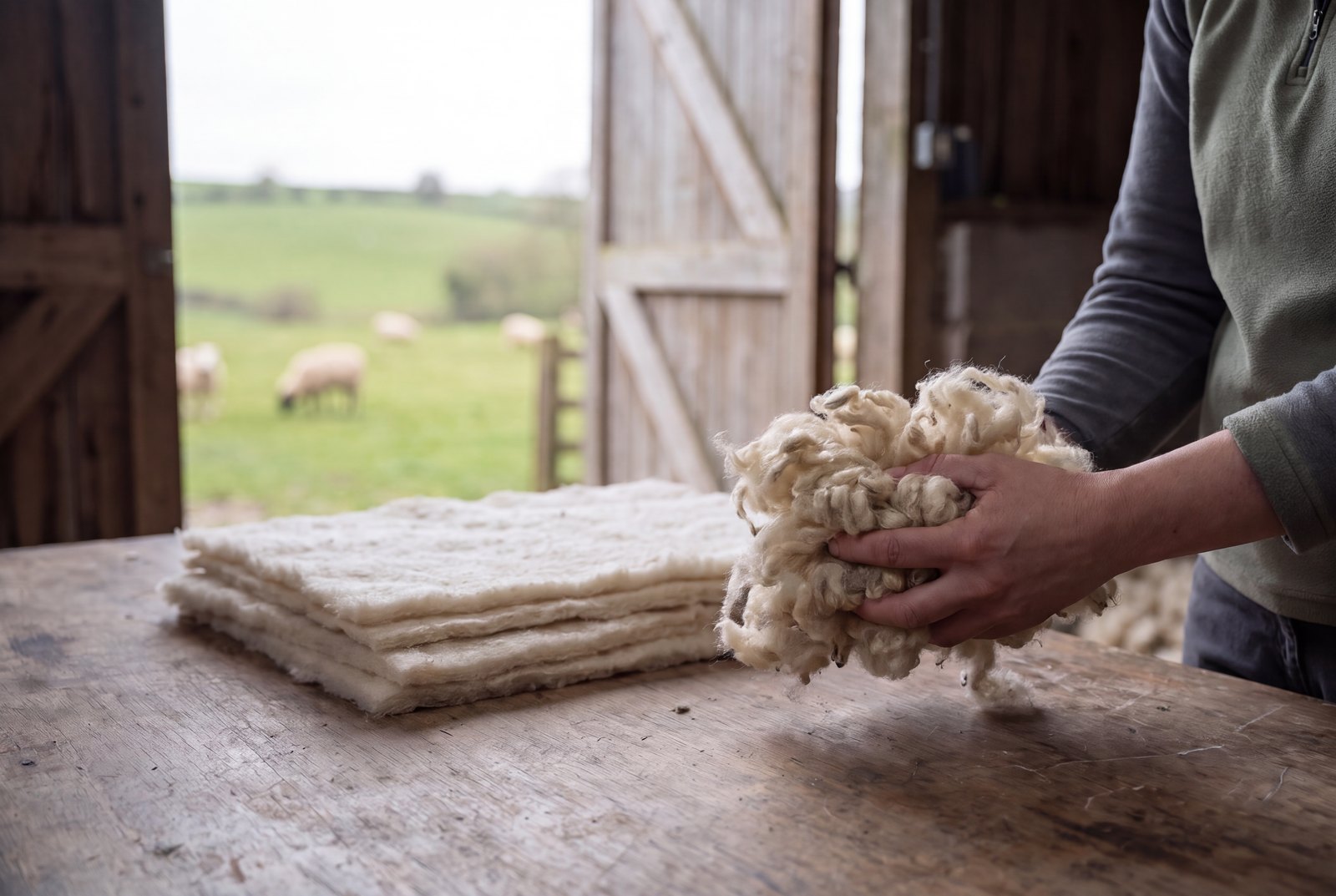
Wool resists compression because the fibre is naturally crimped, and nearly everything a wool pillow does well follows from that single mechanical fact.
What is the best wool pillow?
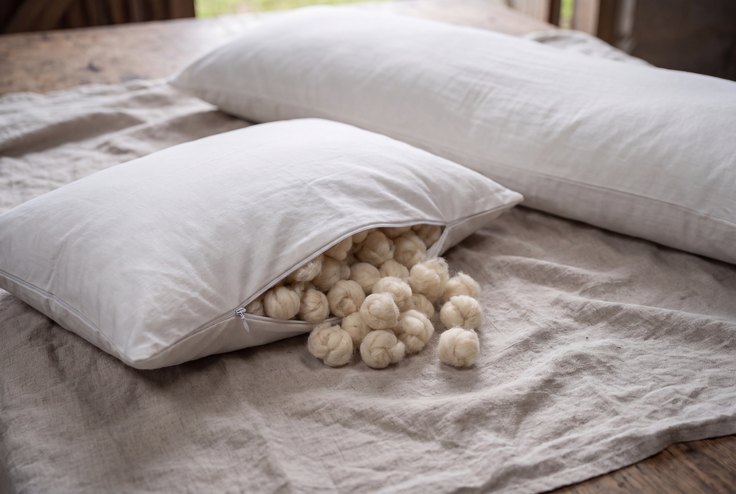
Wool pillows differ less in the fiber than in what their makers are willing to print about it. Some state the ounces of wool inside, the country it grew in and the licence behind the word organic. Others give you a photo and a price. Where a maker says nothing, you are left to guess. That covers the height, the firmness, and whether the pillow can come back.
Is wool naturally flame resistant, and what does that mean in a pillow?
Wool has long been known as hard to set alight, and fiber tests back that up. What it means for the wool inside your bed pillow is a narrower question, and the answer has limits. If you want the basics of the fill first, start with what wool fill is.
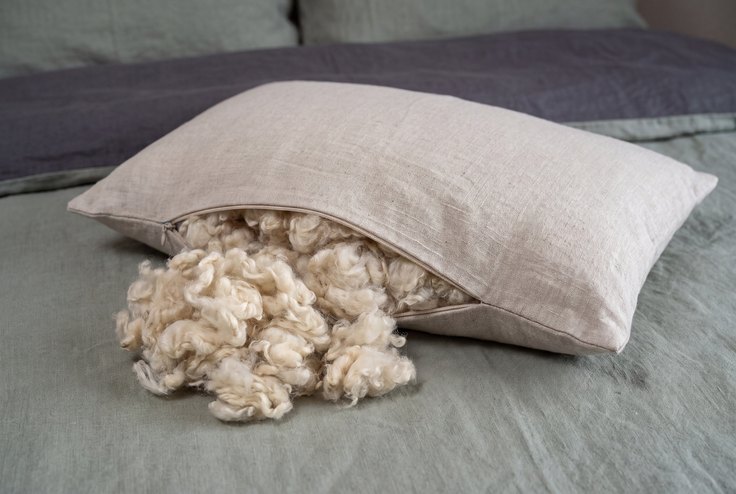
Which wool pillow makers say where their wool came from and how it was washed?
13 of 24 wool pillow makers' pages that loaded on November 11, 2026 say where the wool comes from, and 7 say how it was washed (our count).
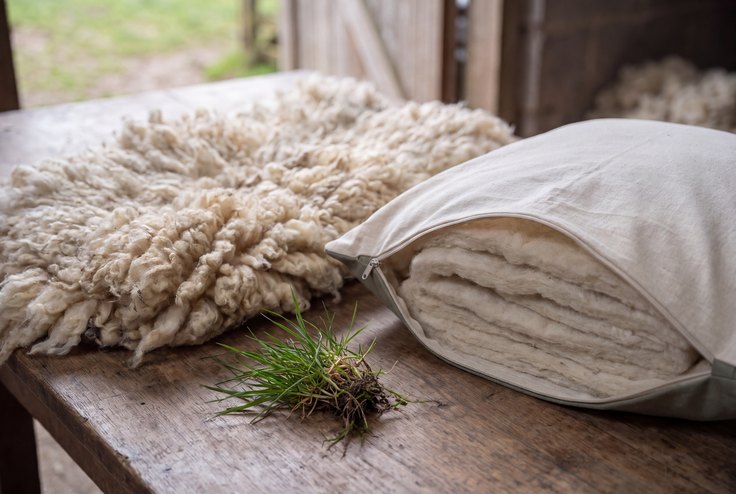
What does "organic wool" certify, and how is it different from responsibly sourced wool?
In the United States, "organic" on a wool pillow is one of the few textile words with a federal rule behind it. "Responsibly sourced" has no rule of its own. One named standard can give it a meaning you can check. Each label asks you to trust different things. Only some name an auditor.
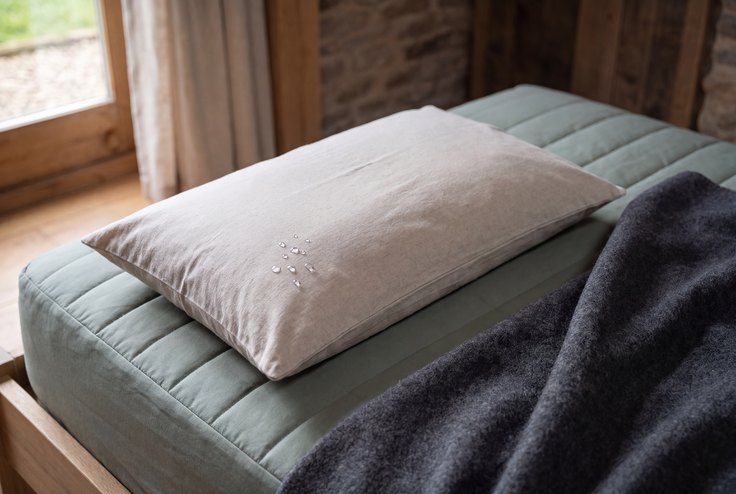
Does wool really hold 30% of its weight in moisture, and what does that mean at night?
Wool pillow listings often say that wool holds about 30% of its own weight in moisture, to keep you at a comfortable temperature. The figure is real. As the wool takes up the damp at your face, the heat leaves with it, so you are less likely to wake up hot. The number comes from lab air that is nearly saturated, and your bedroom is far drier than that.
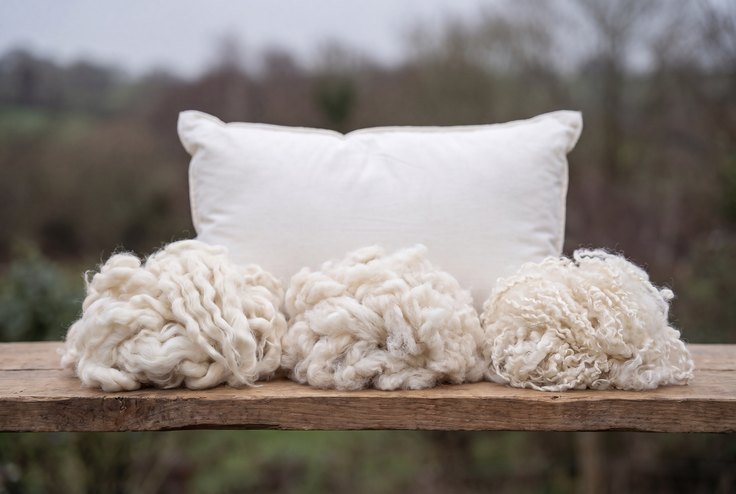
How do New Zealand, Australian, and US wool clips differ for a pillow?
The origin fact you see most often on a wool pillow page is a country name. The wool behind them differs. New Zealand grows mostly coarse wool, Australia grows mostly fine wool, and the United States sits between the two on a much smaller harvest.
Choose wool
Which wool pillow construction suits you?
About Organic Wool Pillow
Why does crimp matter more than anything else?
Crimp is the natural wave in the fibre, and it is what springs a wool fill back after a head lifts off it.
A straight fibre packs. A crimped one resists packing and recovers. That is the whole reason wool works in a pillow, and it is why crimp comes up in so many of the guides here.
What ground does this cover?
Wool as a pillow fill only, from the fleece through to how a pillow behaves after a year of use.
The trade vocabulary explained rather than dropped into a sentence.
What washing removes, what remains, and why a new wool pillow has a scent.
How much the fibre holds before it feels damp, and what that does at three in the morning.
What causes it, and the handling that avoids it.
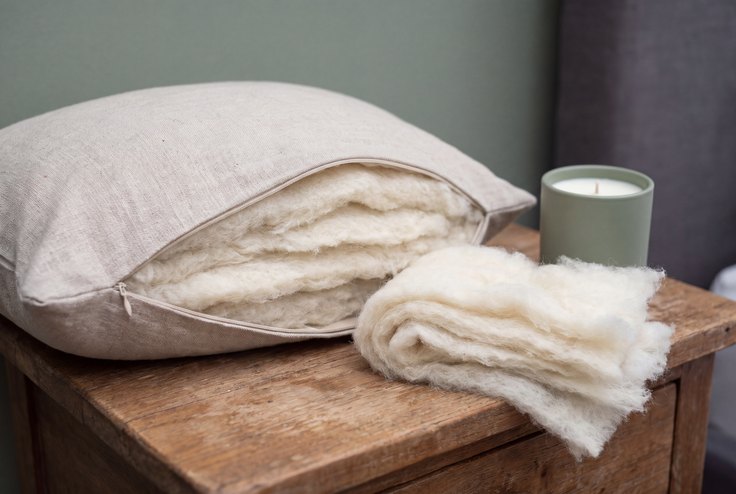
Batting against balls against shredded: three different pillows.
Clip origin by country, and what an organic certification on wool does and does not assure.
How are wellness claims treated?
Like any other claim. Several common ones about wool have thin evidence, and the pages carrying them say so.
Scepticism about a material this site is otherwise enthusiastic about is a useful position, and it is the one taken here.