How do New Zealand, Australian, and US wool clips differ for a pillow?
Updated .
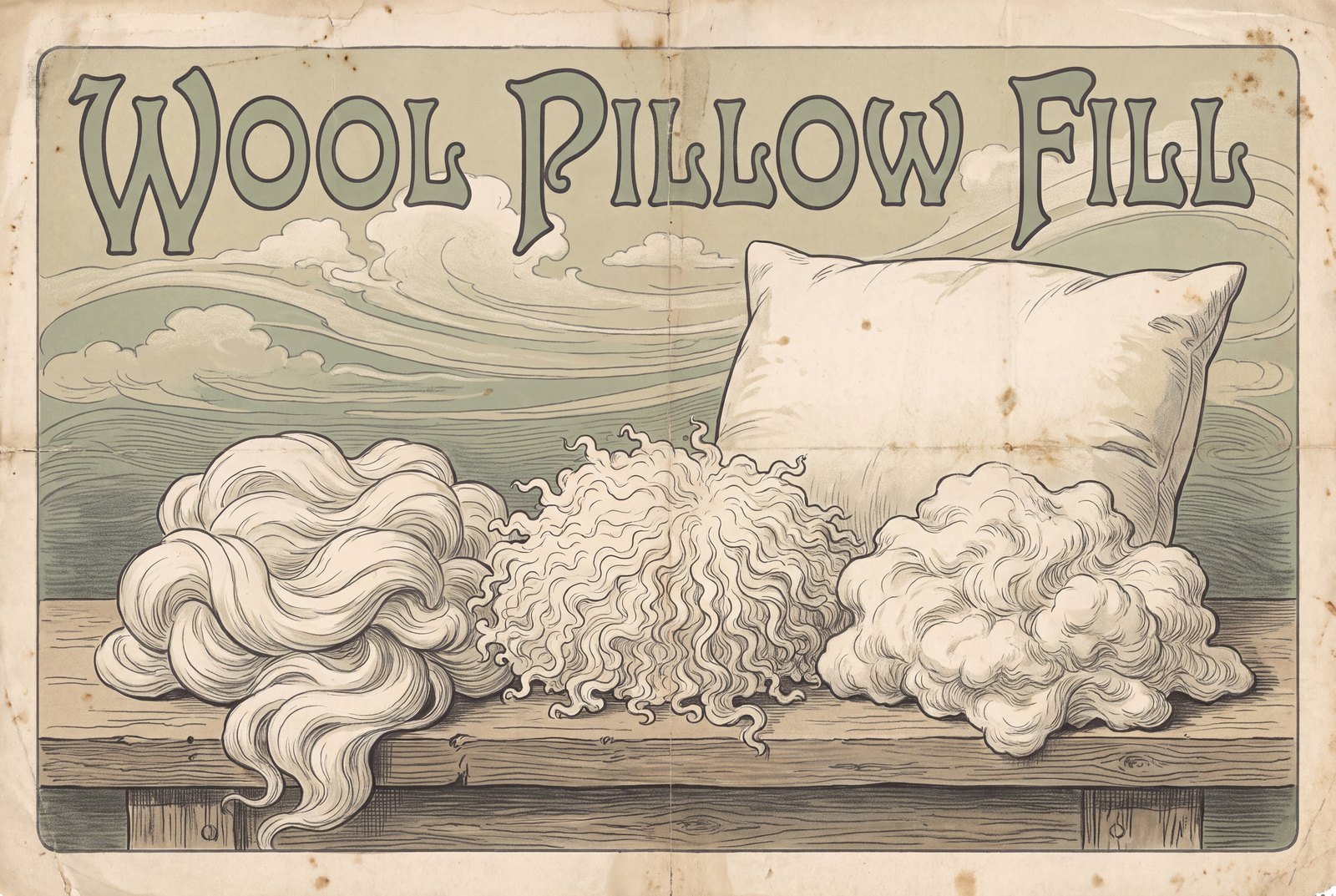
The origin fact you see most often on a wool pillow page is a country name. The wool behind them differs. New Zealand grows mostly coarse wool, Australia grows mostly fine wool, and the United States sits between the two on a much smaller harvest.
Short answer: New Zealand grows mostly strong crossbred wool of 30 to 40 microns (NZWTA). Australia grows mostly fine wool, with a 20.5 micron mean in this season's testing (AWI). The US shore 20.5 million pounds in USDA's latest yearly count (USDA NASS), mostly medium wool. For a pillow, origin is a clue to fiber width, not a quality grade. Ask for the diameter, where the wool was scoured, and how much fill goes into a standard pillow.
This guide is for: people choosing a wool pillow who see a country named on a product page and want to know what that name tells them.
Key Takeaways
- New Zealand's clip is mostly strong wool of 30 to 40 microns (NZWTA), and fine-wool sheep make up only about 5% of its flock (Mecardo).
- Australia's clip averaged 20.5 microns in this season's testing, so "Australian wool" on a page is more likely to mean finer fiber than "New Zealand wool" (AWI).
- We read 13 wool pillow product pages. Of those, 4 named a region or farm, 6 named only a country, and 3 named no country where the sheep grew.
On This Page
What kind of wool does New Zealand grow?
New Zealand mostly grows coarse, springy crossbred wool, and that thicker fiber gives you a firmer pillow that is slow to flatten.
New Zealand's wet hill country suits sturdy sheep that cope with wet feet. The national testing authority says this pushes the country's output toward strong wools of 30 to 40 microns at the coarse end, with only a small amount of fine wool (NZWTA). A micron is a thousandth of a millimeter. The higher the number, the thicker each fiber and the firmer it feels under your head.
One analysis of that testing data finds the biggest categories toward the coarse end, close to a mirror image of Australia's profile (Mecardo). A later analysis uses Beef + Lamb survey estimates to put fine-wool sheep at only about 5% of the New Zealand flock (Mecardo). Fine wool is rare there.
Most of this wool leaves the country as fiber. The Agricultural Marketing Resource Center, a USDA-funded information service, says New Zealand exports most of what it grows. It also calls New Zealand the leading producer of coarse wool for carpets, blankets and upholstery (AgMRC).
What that means for you is simple. When a pillow page says New Zealand wool and nothing more, the odds favor a coarse crossbred fiber. In our judgement that suits a pillow, because thick fibers spring back after each night's pressure. Why does crimp make wool work in a pillow? explains where that spring comes from. The label still cannot prove which part of the clip you got.
What kind of wool does Australia grow?
Australia mostly grows fine wool made for clothing, and in a pillow that finer fiber tends to feel soft but pack down sooner.
Australia is the other half of that mirror, and it is the bigger half. Its clip is the largest of the three by a wide margin, measured in greasy weight, meaning the weight straight off the sheep before washing.
Most of it is fine wool. Testing for the season through March showed a mean fiber diameter of 20.5 microns, well inside the fine range (AWI). New Zealand's biggest categories are close to twice that width. For you, that means a softer, denser fill. AgMRC calls Australia the largest supplier of apparel wool and says two-thirds of the wool sold on the world market comes from there (AgMRC).
Fine wool goes into clothing because it feels soft against skin. In a pillow the fiber sits behind a cotton cover, so how the fill springs back matters more than how it feels in your fingers. That does not rule out Australian wool. Australia also grows crossbred wool, and in the finer crossbred grades it out-produces New Zealand (Mecardo).
So what should you expect from a page that says Australian wool? Finer fiber is the likelier reading. In our judgement, fine fill packs down sooner than coarse fill under the same head. Ask for the diameter. If the seller cannot give you the diameter or the breed, you are guessing, and so is the seller.
What kind of wool does the United States grow?
The US clip is small and mostly medium in width, which gives you a middle ground: springier than fine wool, softer than coarse wool.
The American harvest is much smaller. USDA's latest yearly report counted 20.5 million pounds of shorn wool (USDA NASS). The same report says more than a quarter of US sheep and lambs were hair sheep or wool-hair crosses.
In fiber width, the US clip falls between the other two. The American Sheep Industry Association's export brochure splits US wool into micron bands, with only small shares at the very fine and very coarse ends (ASI). Add up the middle bands and about three quarters of the clip sits in the medium range. For you, that means fill that springs back without feeling harsh. AgMRC describes the clip the same way: US wool competes with coarser New Zealand wool and finer Australian wool.
A lot of it still goes overseas. ASI figures reported last year put exports at more than half of the average American clip, and China is the largest market (Wyoming Livestock Roundup). That changes what "domestic" means. A domestic claim can describe wool that grew in the US but was scoured abroad.
If you want a pillow whose wool never left the country, ask where the wool was washed and carded, not only where it grew. A seller who knows can answer that quickly.
How do the three clips compare side by side?
Side by side, the three clips differ most in fiber diameter and volume, and the diameter gap matters more for a pillow than the flag does.
The table puts the figures above in one place. Each cell names its source. The years differ, so read the volume row as a sense of scale, not as a direct comparison.
| New Zealand | Australia | United States | |
|---|---|---|---|
| Main fiber type | Strong crossbred | Fine wool | Mostly medium |
| Typical diameter | 30 to 40 microns (NZWTA) | 20.5 micron mean this season (AWI) | Mostly in the medium bands (ASI) |
| Greasy volume | Second largest of the three (Journal of Natural Fibers) | Largest of the three (Sheep Central) | Smallest by far (USDA NASS) |
| Where it goes | Mostly exported as fiber (AgMRC) | Most of the wool on the world market (AgMRC) | More than half exported (WLR) |
| Mulesing | Banned by law (Farm Online) | No federal ban; states set welfare rules (Farm Online) | No figure found |
The difference in volume is large. The US grows a small fraction of either of the other clips. That fits the small makers you will see in the product pages counted below.
The row that shapes your pillow is diameter. A flag is a rough stand-in. A stated micron range or breed tells you much more. If those terms are new to you, How do you read micron, grade, and staple on a wool pillow spec? explains them without a glossary.
Does country of origin change how a wool pillow feels?
Origin changes feel only through the fiber it tends to supply; how the wool is cleaned, formed, and filled usually matters more to your neck.
A country affects your neck only through the kind of fiber it usually supplies. The table below is our judgement, not a maker's claim. None of the sellers we read says how its fiber band behaves as pillow fill.
| Fiber band | Where it is most common | How it tends to behave as fill | What to ask |
|---|---|---|---|
| Fine | Australian fine wool | Soft and dense, flattens sooner under a head | Is it blended with coarser wool? |
| Medium | Much of the US clip | A middle ground: springy without feeling harsh | What breed or micron range? |
| Strong | New Zealand crossbred | Firm and springy, slow to crush | Is it loose, balled, or layered batting? |
The form of the wool and the amount of fill often matter more than the country. More fill gives you a higher, firmer pillow. Less gives you one you can squash and shape. Makers in one country differ widely. One US mill fills its standard pillow with carded batting (Cece's Wool), while a New Zealand maker fills its pillow with wool balls instead (Kiwi Wool).
Another US maker says that pillows built from wool layers may settle noticeably in the first few months (Holy Lamb Organics). If you buy layered fill, expect it to sit lower under your head after those first months. So two pillows from the same country can feel nothing alike. You will learn more from the form and the ounces than from the flag.
Does country of origin tell you anything about animal welfare?
New Zealand bans mulesing by law; Australia has no national ban, and origin alone cannot prove how any one flock was treated.
Mulesing means cutting away skin from around a sheep's backside to prevent flystrike, often without pain relief (World Animal Protection). If you care about how the sheep were treated, this is the practice to ask about.
New Zealand law makes it an offence to remove the breech, tail skin folds or tail skin wrinkles of a sheep by any method (NZ Legislation). The ban took effect in October 2018. Even a veterinarian using pain relief is not allowed to do it (Farm Online).
Australia works differently. The same report explained that Australia cannot ban the practice nationally because the states govern animal welfare. So "Australian wool" alone does not tell you whether a particular flock was mulesed. We found no US figure on the practice, so we make no claim about it.
If welfare decides your choice, a certificate says more than a country. Textile Exchange's Responsible Wool Standard includes a mulesing ban (WWD). Ask whether your fill is covered by that standard or by a stated non-mulesed claim. Then ask the seller who holds the certificate, so you can check it yourself.
What do wool pillow product pages say about origin?
We read a set of wool pillow product pages; most named a country for the fill, fewer named a region or farm, and none gave a micron figure.
We read 13 wool pillow product pages on September 28, 2026, found through two searches, one for New Zealand wool pillows and one for American wool pillows. We counted only what each page said about where its sheep grew. We did not buy, handle, weigh or test anything.
| Bucket | Pages | Count |
|---|---|---|
| Names a region, farm or co-op | Lora & Flok, American Blossom Linens, Holy Lamb Organics, Frankenmuth Woolen Mill | 4 |
| Names a country only | Turmerry on Amazon, Soak & Sleep, Kiwi Wool, Wright Wool, Cece's Wool, All American Clothing | 6 |
| Names no country where the sheep grew | Do Not Disturb (page since taken down), PlushBeds, Cuddle Ewe | 3 |
Two patterns stood out. None of the pages stated a micron figure for the fill, so the one number that links origin to feel was missing from every page we read. The third bucket also includes a page that says where the pillow is sewn but not where the wool grew. That is easy to mistake for an origin claim.
The pages that named a region were mostly small makers or farms. That is a pattern in a small set of pages, not a rule. When you read a page yourself, start with the question we used: does it say where the sheep grew?
How should you read an origin claim before you buy?
Treat an origin claim as a starting point: ask where the sheep grew, where the wool was scoured, and what diameter the fill sits at.
A country name starts your questions. These five turn it into something you can use:
- Where did the sheep grow? A region, farm or co-op is easier to check than a whole country.
- Where was the wool scoured and carded? Much of the US clip is exported, so the wool may have grown in one country and been cleaned in another.
- What diameter or breed is it? A micron range tells you more about feel than any flag does.
- What form, and how many ounces? Loose balls, carded batting and layers all behave differently, so ask for the fill weight of a standard pillow.
- Is there a welfare or organic certificate? A certificate stays with the fiber wherever it is shipped. A country name does not tell you how the wool was handled.
The same maker may buy wool from two countries. Holy Lamb offers wool from a co-op of small farms in the western US and an organic wool option grown in New Zealand (Holy Lamb Organics). One pillow name can cover two origins. Ask which one you are getting. If a page also makes an organic claim, What makes a wool bed pillow organic, and is it worth paying for? covers that separately.
Common questions
Is New Zealand wool better than American wool for a pillow?
Neither wins on origin alone. New Zealand's clip leans coarse and the US clip leans medium, so they suit different preferences. Ask for the diameter and fill weight of the pillow you are looking at.
Is fine Australian wool too fine to use as fill?
It works, with one trade-off. Fine fill is soft and dense, and in our judgement it flattens sooner than coarse wool. Some makers blend fine and coarse fiber, so ask what the fill contains.
Does domestic wool mean it was cleaned in the US?
No. It usually means the sheep grew here. More than half of the American clip is exported (WLR), so ask where your wool was scoured and carded.
Can organic wool come from any of these countries?
Yes. Organic status comes from certification, not from the country. At least one US maker sells an organic wool option grown in New Zealand (Holy Lamb Organics).
Why do so few pillows use US wool?
There isn't much of it. The US clip is a small fraction of either the New Zealand or the Australian clip (USDA NASS). Much of that is exported before a pillow maker can buy it.
Does origin change the smell of a new pillow?
How the wool was washed matters more than where it grew. The amount of the sheep's own lanolin oil left in the fill is set during scouring, the washing that cleans raw wool, so ask the seller how the wool was cleaned.
Sources
Here are the pages, papers and shops this wool guide draws on, each named beside the question it answers.
- NZWTA (wooltesting.nzwta.co.nz), drawn on in “Key Takeaways”; “What kind of wool does New Zealand grow?”; “How do the three clips compare side by side?”.
- AWI (wool.com), drawn on in “Key Takeaways”; “What kind of wool does Australia grow?”; “How do the three clips compare side by side?”.
- USDA NASS (esmis.nal.usda.gov), drawn on in “What kind of wool does the United States grow?”; “How do the three clips compare side by side?”; “Common questions”.
- Mecardo (mecardo.com.au), drawn on in “Key Takeaways”; “What kind of wool does New Zealand grow?”.
- Mecardo (mecardo.com.au), drawn on in “What kind of wool does New Zealand grow?”; “What kind of wool does Australia grow?”.
- AgMRC (agmrc.org), drawn on in “What kind of wool does New Zealand grow?”; “What kind of wool does Australia grow?”; “How do the three clips compare side by side?”.
- ASI (sheepusa.org), drawn on in “What kind of wool does the United States grow?”; “How do the three clips compare side by side?”.
- Wyoming Livestock Roundup (wylr.net), drawn on in “What kind of wool does the United States grow?”; “How do the three clips compare side by side?”; “Common questions”.
- Journal of Natural Fibers (tandfonline.com), drawn on in “How do the three clips compare side by side?”.
- Sheep Central (sheepcentral.com), drawn on in “How do the three clips compare side by side?”.
- Farm Online (farmonline.com.au), drawn on in “How do the three clips compare side by side?”; “Does country of origin tell you anything about animal welfare?”.
- Cece's Wool (ceceswool.com), drawn on in “Does country of origin change how a wool pillow feels?”; “What do wool pillow product pages say about origin?”.
- Kiwi Wool (kiwiwool.nz), drawn on in “Does country of origin change how a wool pillow feels?”; “What do wool pillow product pages say about origin?”.
- Holy Lamb Organics (holylamborganics.com), drawn on in “Does country of origin change how a wool pillow feels?”; “What do wool pillow product pages say about origin?”; “How should you read an origin claim before you buy?”; “Common questions”.
- World Animal Protection (api.worldanimalprotection.org), drawn on in “Does country of origin tell you anything about animal welfare?”.
- NZ Legislation (legislation.govt.nz), drawn on in “Does country of origin tell you anything about animal welfare?”.
- WWD (wwd.com), drawn on in “Does country of origin tell you anything about animal welfare?”.
- Lora & Flok (loraandflok.co.nz), drawn on in “What do wool pillow product pages say about origin?”.
- American Blossom Linens (americanblossomlinens.com), drawn on in “What do wool pillow product pages say about origin?”.
- Frankenmuth Woolen Mill (wool-bedding.com), drawn on in “What do wool pillow product pages say about origin?”.
- Turmerry on Amazon (amazon.com), drawn on in “What do wool pillow product pages say about origin?”.
- Soak & Sleep (soakandsleep.com), drawn on in “What do wool pillow product pages say about origin?”.
- Wright Wool (wrightwool.co.nz), drawn on in “What do wool pillow product pages say about origin?”.
- All American Clothing (allamericanclothing.com), drawn on in “What do wool pillow product pages say about origin?”.
- PlushBeds (plushbeds.com), drawn on in “What do wool pillow product pages say about origin?”.
- Cuddle Ewe (cuddleewe.com), drawn on in “What do wool pillow product pages say about origin?”.