How do you read micron, grade, and staple on a wool pillow spec?
Updated .
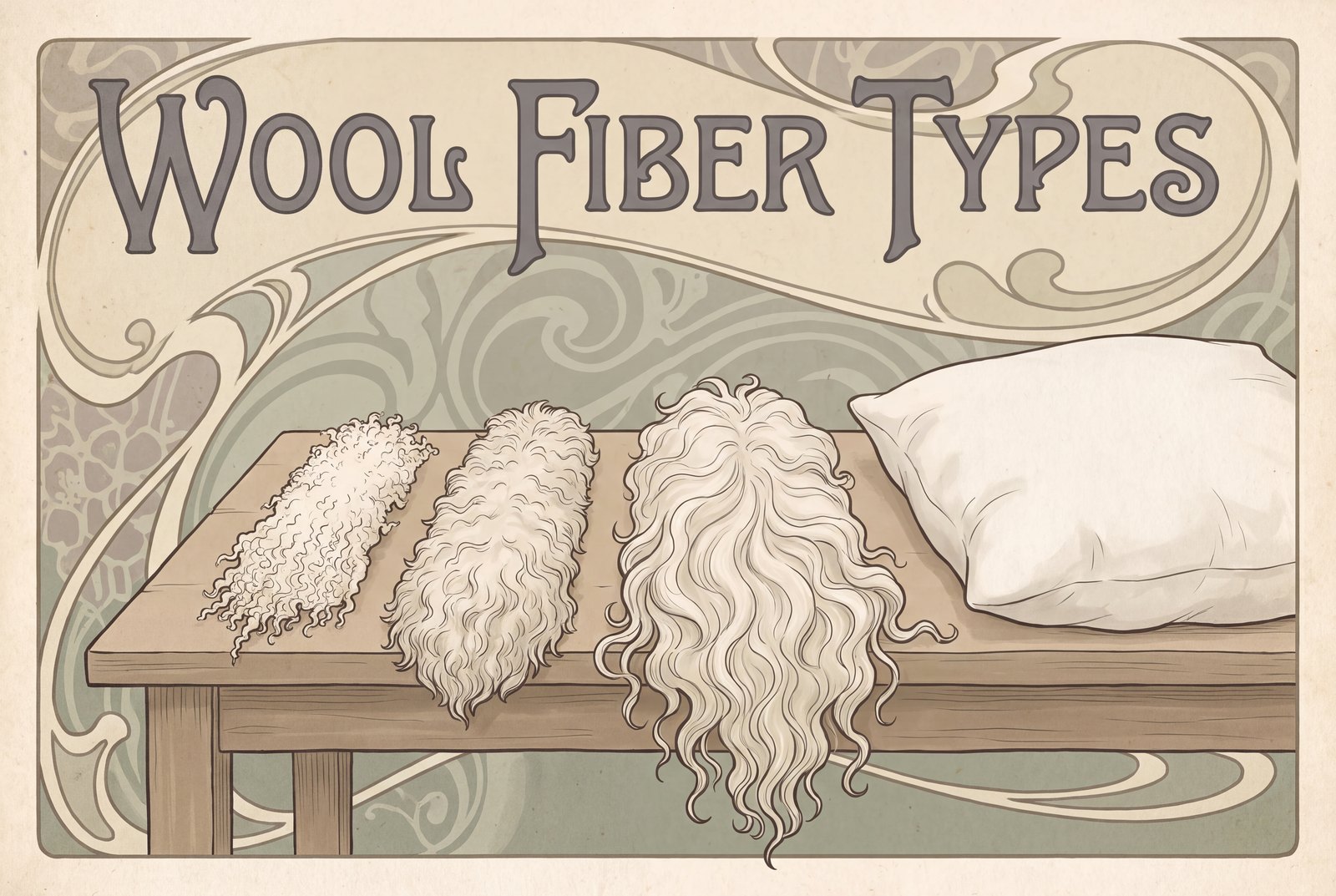
The fiber inside a wool pillow decides how soft it feels and how well it keeps its height. The wool trade describes that fiber with three words: micron, grade, and staple. Once you know them, you can tell from a spec whether the fill will feel soft against your face or push back firmly under your head. This page explains each one. It also shows how rarely pillow sellers print them.
Short answer: Micron is the average thickness of the fibers, and a lower number means finer wool. A grade such as 64s is a named band of microns. The USDA sets 64s at 20.60 to 22.04 microns (USDA AMS). Staple is fiber length, and it is measured in inches. The finest band runs about 18 to 24 microns (R.H. Lindsay). Bedding sellers prefer 30 microns and up (Woolroom). Most pillow listings give none of these numbers, so you will usually have to ask.
This guide is for: people comparing wool pillows who have found fiber terms on a listing, or found none, and want to know what those terms mean and what to ask.
Key Takeaways
Three facts carry most of the weight: what a grade number means, why a fine average can still itch, and how rarely pillow listings give any figure.
- The US grade scale runs from 80s down to 36s. A 64s grade means an average of 20.60 to 22.04 microns (USDA AMS).
- Itch comes from the thick tail, not the average. Once roughly five percent of the fibers are thicker than 30 microns, most wearers feel a fabric as prickly (That Yarn).
- We read 10 wool pillow pages on September 26, 2026. None of them gave a micron, a grade number or a staple length for its fill. Three described the fiber in words, and seven said nothing about the fiber at all.
Each section below explains one of these figures. The last section turns them into questions you can send a seller before you buy.
On This Page
Each entry below matches a section heading word for word, so you can jump straight to the question that brought you to this page today.
What do micron, grade, and staple each measure?
Micron is fiber thickness, grade is a named band of thickness, and staple is fiber length. Two describe fineness; one describes length.
South Dakota State University Extension names three ways US wool grades are described: the American blood system, the spinning count system and the micron system (SDSU Extension). All three describe fineness. Staple, the third word you will see on a spec, describes length.
Micron is the measured number. It is the average diameter of the fibers in a sample. SDSU calls the micron system the most precise way to grade wool, because it measures that diameter directly. That makes micron the most objective word on a spec.
Grade is a label for a band of microns. A count number, or a blood name such as "half blood," places the fiber somewhere inside a range. It does not tell you where.
Staple is the length of a lock as it grew on the sheep, measured without stretching it.
You need all three to picture the fill. Micron and grade tell you how thick each fiber is. That shapes softness. It also shapes how firmly the fill pushes back against your head. Staple tells you how long the fibers are, and length affects how well they hold together once they are carded into batting. A listing that gives one of these and skips the others shows you only part of the fill.
How fine is a micron, and what range does pillow wool fall in?
A micron is a millionth of a meter. Most wool falls between 18 and 40 microns, and bedding sellers tend to favor the coarser half of that span.
Wool fibers are far too thin to judge by eye. The number on a spec does that work for you. A US wool merchant's glossary puts most wool inside that span and splits it into three working bands (R.H. Lindsay):
- Fine: the thinnest band on this scale.
- Medium: wool used in blankets and knitwear. Corriedale is the breed most tied to this band.
- Coarse: wool used mostly in the carpet industry.
Pillow fill tends to come from the coarser end. Woolroom, a British bedding seller, says bedding wool performs best at a minimum of 30 micron (Woolroom). Wisewool, a New Zealand maker, describes the strong wool it uses as coarse crossbred wool (Wisewool). Both are sellers describing their own fiber choices. Neither is a neutral test. You should read their ranges as a picture of common practice.
You can use these bands as a quick check. A low micron means fine wool. A micron past 30 means you are getting a stronger crossbred wool. Either can work in a pillow. The sections below explain what each one gives up.
What does a grade like 64s or half blood mean?
A grade is a name for a band of average thickness. The USDA ties each count, from 80s down to 36s, to a fixed micron range and spread.
Grades come from older ways of sorting wool by eye. In the count system, the count is the number of hanks of yarn, each 560 yards long, that one pound of wool could be spun into (SDSU Extension). A higher count means a finer fiber, because finer wool spins more yarn. The USDA later assigned each count a range of average diameter and a cap on spread (Wikipedia).
Blood names such as half blood are older still. SDSU says the blood system began as a measure of how much fine-wool breeding a sheep had, and that USDA grading standards do not recognize it.
| USDA count | Average fiber diameter (microns) |
|---|---|
| 64s | 20.60 to 22.04 |
| 56s | 26.40 to 27.84 |
| 48s | 31.00 to 32.69 |
These are selected grades, with micron ranges from USDA AMS.
If a listing says "Grade A," that is not a grade on this scale. It is the seller's own label. You can ask the seller which micron it stands for, and a seller who knows the fiber should be able to tell you.
What is staple length, and why does it matter in a pillow?
Staple is the length of an unstretched lock of wool. Graders class it in inches, and the minimum for each class shifts with the grade.
Staple is measured on the lock before the wool is washed and carded. You can ask a wool lab for it in inches. Montana State's lab says results will include staple length measured in inches if you ask for a ruler measurement (Montana State University Wool Lab). Length decides where the wool goes next. Longer wool is combed and spun into smooth yarn. Shorter wool within a grade goes to the woolen system, and longer wool to the worsted system (CSU Extension glossary).
The trade also cares because staple predicts fiber length after combing. Australia's wool testing authority says the average fiber length after combing tracks closely with the staple length and strength of the raw fleece (AWTA).
This next part is reasoning, not testing. Longer fibers give a layer of wool more to grip. That helps the fill hold together. If a listing names combing waste as the fill, you are buying the short end of the fleece. Woolroom also names a preferred staple length next to its micron claim (Woolroom). You can ask any seller for the same figure.
Is finer wool better for a pillow?
Not by default. Finer wool is softer against skin, but pillow fill sits under a cover, and bedding sellers argue coarser fiber springs back.
Finer wool is softer, and softness is what clothing buyers pay for. A pillow does a different job. The fill sits inside a woven cover. What you notice each night is how well it holds your head up and how much it recovers by morning.
Bedding sellers argue that thicker fiber does this job better. Wisewool says strong wool's thicker fibres resist compression over time (Wisewool). Woolroom says very fine fibres lack the structure needed for bedding (Woolroom). Both companies sell coarse wool fill. We found no public test that compares fine and strong wool pillows side by side.
Sellers often call the height a pillow keeps its "loft." This page calls it height. Our judgement: if you want a pillow that stays tall and springy, a micron in the 30s is a fair thing to ask for. Your skin matters too. If it reacts to wool and you sleep with your face pressed to a thin cover, finer fill or a thicker cover is the safer bet. Our guide to whether a wool pillow is worth it covers the other factors, including fill weight and whether you can adjust the fill.
Why can wool with a low micron still feel scratchy?
Because a micron figure is an average. Itch comes from the few thick fibers in the tail, and a wide spread can hide many behind a low mean.
Every fleece contains a mix of fiber thicknesses, and the micron on a spec is only their average. The itch comes from the thick end of the mix. A yarn seller's guide sums up the research: once roughly five percent or more of the fibers exceed 30 microns, most wearers register a fabric as prickly (That Yarn). The same guide describes one study. In it, a slightly coarser wool felt less prickly than a finer one. The finer wool had the wider spread.
That is why labs report two related numbers. Prickle factor is the share of fibers above that line. Comfort factor is the share below it (That Yarn). Higher is better for your skin.
The USDA grades already account for this spread. Each grade caps how much the fibers can vary around the average (USDA AMS). A lab report will list standard deviation and comfort factor alongside the average (Montana State University Wool Lab).
Inside a pillow this matters less than it does in a sweater. The cover sits between you and the fill. If you are sensitive to wool, ask for the comfort factor as well as the micron. Our page on what wool fill is explains how batting and wool balls differ.
What do wool pillow listings tell you about the fiber?
Very little. Of the ten pillow pages we read, none gave a micron, a grade number, or a staple length for the wool inside the pillow itself.
We read the product text of 10 wool bed pillow pages sold to US buyers on September 26, 2026, and counted what each one said about the wool inside. We sorted the pages into three buckets:
- Gave a figure (0 of 10): a micron, a grade number or a staple length for the fill.
- Described the fiber in words only (3 of 10): Turmerry calls its New Zealand wool fine and crimped, Woolino labels its Australian wool "Grade A," and Naturepedic mentions crimped wool fibers.
- Said nothing about the fiber (7 of 10): Frankenmuth Woolen Mill, Holy Lamb Organics, Eartheasy, American Blossom Linens, The Futon Shop, Cece's Wool and Woolroom.
| What the pages stated | Pages |
|---|---|
| Micron, grade number or staple length for the fill | None |
| Fiber described in words only | Three |
| Fill weight in ounces or pounds | Five |
| Where the wool came from (country or region) | Six |
We counted only what the page text said. A seller may publish a spec in an image, on another page or on request. So a zero here means the listing is silent. The seller may still know. Certification is a separate question. It tells you how the wool was raised and processed, not how thick it is. Our guide to what makes a wool bed pillow organic covers that side.
What should you ask a seller when the spec is missing?
Ask for the average micron, the breed or grade, and whether the wool is batting or loose balls. A seller who knows the fiber can answer fast.
The table below is our own judgement. It is not a maker's spec, and no maker we read publishes it.
| Ask for | Why it helps | A useful answer sounds like |
|---|---|---|
| Average micron | Tells you whether the fill is fine or strong wool | One number or a narrow range |
| Breed or USDA count | Lets you check the micron against the grade table | "Corriedale" or a named count |
| Comfort factor | Tells you how many thick fibers sit in the tail | 95% or higher |
| Staple length | Tells you whether the fill is long fiber or combing waste | A figure in inches |
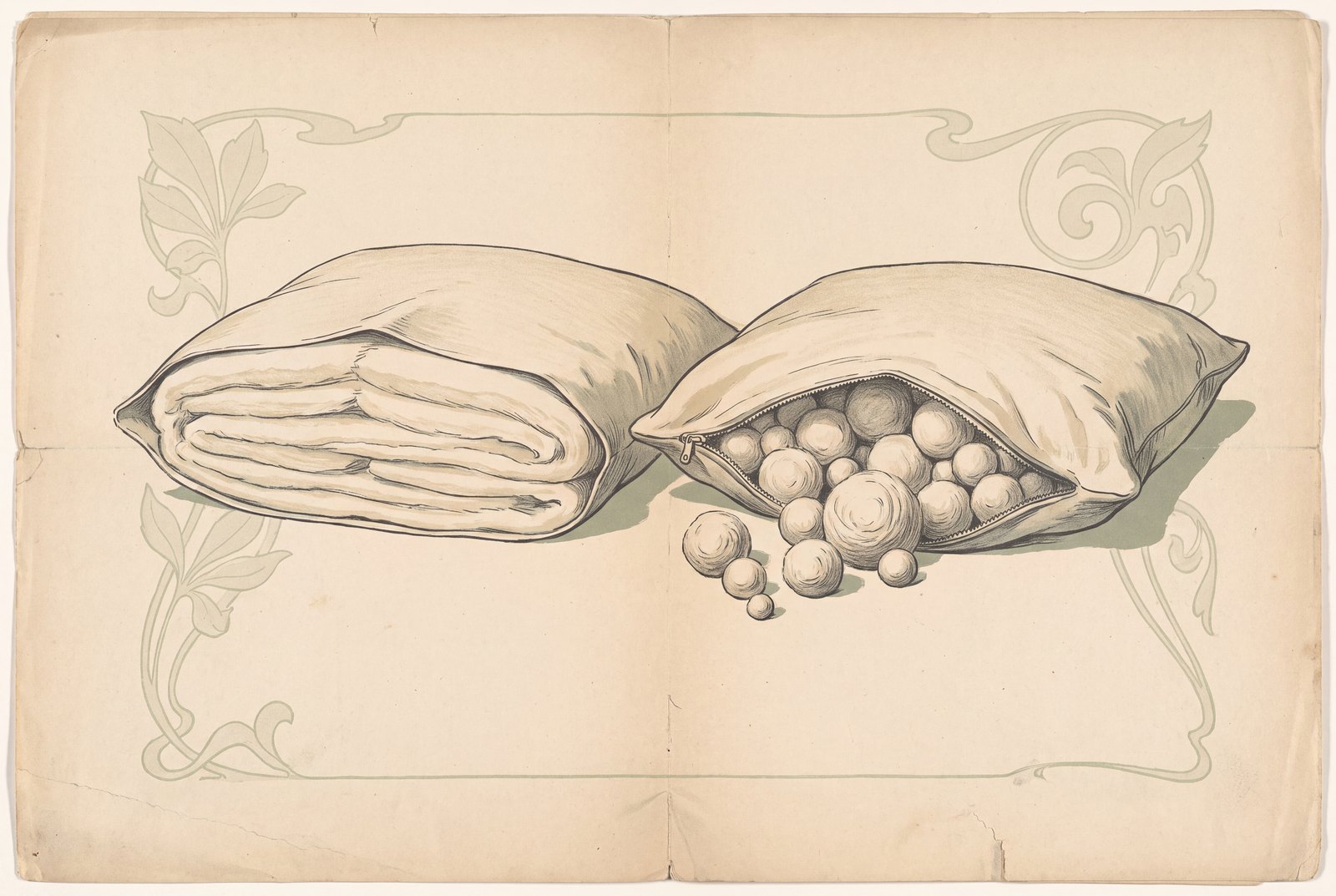
| Batting or loose balls | Changes how the fill settles and adjusts | Layered carded batting, or wool balls behind a zipper |
Start with the micron, because it anchors everything else. A grade helps you check the answer. A seller who names a fine count but quotes a micron from the carpet band has made a mistake somewhere. Comfort factor matters for sensitive skin. Staple length matters most if the fill is batting.
Vague answers tell you something too. If a seller replies "premium" or "Grade A," ask again for a number. If the seller cannot give you one, you can still buy the pillow. You are then judging it on feel and return policy rather than on the fiber. Save the answers you get. They let you compare sellers side by side.
Common questions
Short answers to the questions people ask most about wool specs, each one built on the sources linked in the sections above this one.
Is a lower micron number always softer?
Usually, but not always. The micron is an average, and a fabric starts to feel prickly once roughly five percent of its fibers are thicker than 30 microns (That Yarn). A wide spread of thicknesses can make a finer average feel rougher.
What does "Grade A" wool mean on a pillow?
"Grade A" is the seller's own label. The USDA scale uses numbered counts, and "Grade A" is not one of them (USDA AMS). You can ask the seller which micron it stands for.
Are 100s or Super 120s real wool grades?
Not on the USDA scale. The finest official grade is "finer than 80s" (USDA AMS). One yarn seller explains that those higher numbers belong to the Super-S system, which grades finished worsted fabric (That Yarn).
Is "strong wool" a lower grade of wool?
Strong wool means thicker fiber, not worse fiber. Wisewool, a New Zealand maker, uses the term for coarser crossbred wool (Wisewool). You are more likely to meet it in bedding than in sweaters.
Can you have the wool in your pillow tested?
Yes, if you can take a small sample. The Montana State University Wool Lab reports average micron, standard deviation and comfort factor. Staple length means little once wool has been carded. The micron results are the useful part.
Does "half blood" describe the sheep's breeding?
The name once did. The blood system began as a measure of how much fine-wool breeding a sheep had. Today it is a broad way to class wool, and USDA grading standards do not recognize it (SDSU Extension).
Sources
Here are the pages, papers and shops this wool guide draws on, each named beside the question it answers.
- USDA AMS (ams.usda.gov), drawn on in “Key Takeaways”; “What does a grade like 64s or half blood mean?”; “Why can wool with a low micron still feel scratchy?”; “Common questions”.
- R.H. Lindsay (rhlindsaywool.com), drawn on in “How fine is a micron, and what range does pillow wool fall in?”.
- Woolroom (thewoolroom.com), drawn on in “How fine is a micron, and what range does pillow wool fall in?”; “What is staple length, and why does it matter in a pillow?”; “Is finer wool better for a pillow?”.
- That Yarn (thatyarn.com), drawn on in “Key Takeaways”; “Why can wool with a low micron still feel scratchy?”; “Common questions”.
- SDSU Extension (extension.sdstate.edu), drawn on in “What do micron, grade, and staple each measure?”; “What does a grade like 64s or half blood mean?”; “Common questions”.
- Wisewool (wisewool.co.nz), drawn on in “How fine is a micron, and what range does pillow wool fall in?”; “Is finer wool better for a pillow?”; “Common questions”.
- Wikipedia (en.wikipedia.org), drawn on in “What does a grade like 64s or half blood mean?”.
- Montana State University Wool Lab (montana.edu), drawn on in “What is staple length, and why does it matter in a pillow?”; “Why can wool with a low micron still feel scratchy?”; “Common questions”.
- CSU Extension glossary (extension.colostate.edu), drawn on in “What is staple length, and why does it matter in a pillow?”.
- AWTA (awtawooltesting.com.au), drawn on in “What is staple length, and why does it matter in a pillow?”.
- Turmerry (turmerry.com), drawn on in “What do wool pillow listings tell you about the fiber?”.
- Woolino (woolino.com), drawn on in “What do wool pillow listings tell you about the fiber?”.
- Naturepedic (naturepedic.com), drawn on in “What do wool pillow listings tell you about the fiber?”.
- Frankenmuth Woolen Mill (wool-bedding.com), drawn on in “What do wool pillow listings tell you about the fiber?”.
- Holy Lamb Organics (holylamborganics.com), drawn on in “What do wool pillow listings tell you about the fiber?”.
- Eartheasy (eartheasy.com), drawn on in “What do wool pillow listings tell you about the fiber?”.
- American Blossom Linens (americanblossomlinens.com), drawn on in “What do wool pillow listings tell you about the fiber?”.
- The Futon Shop (thefutonshop.com), drawn on in “What do wool pillow listings tell you about the fiber?”.
- Woolroom (thewoolroom.com), drawn on in “What do wool pillow listings tell you about the fiber?”.