What does scouring remove from wool, and how much lanolin stays in a pillow?
Updated .
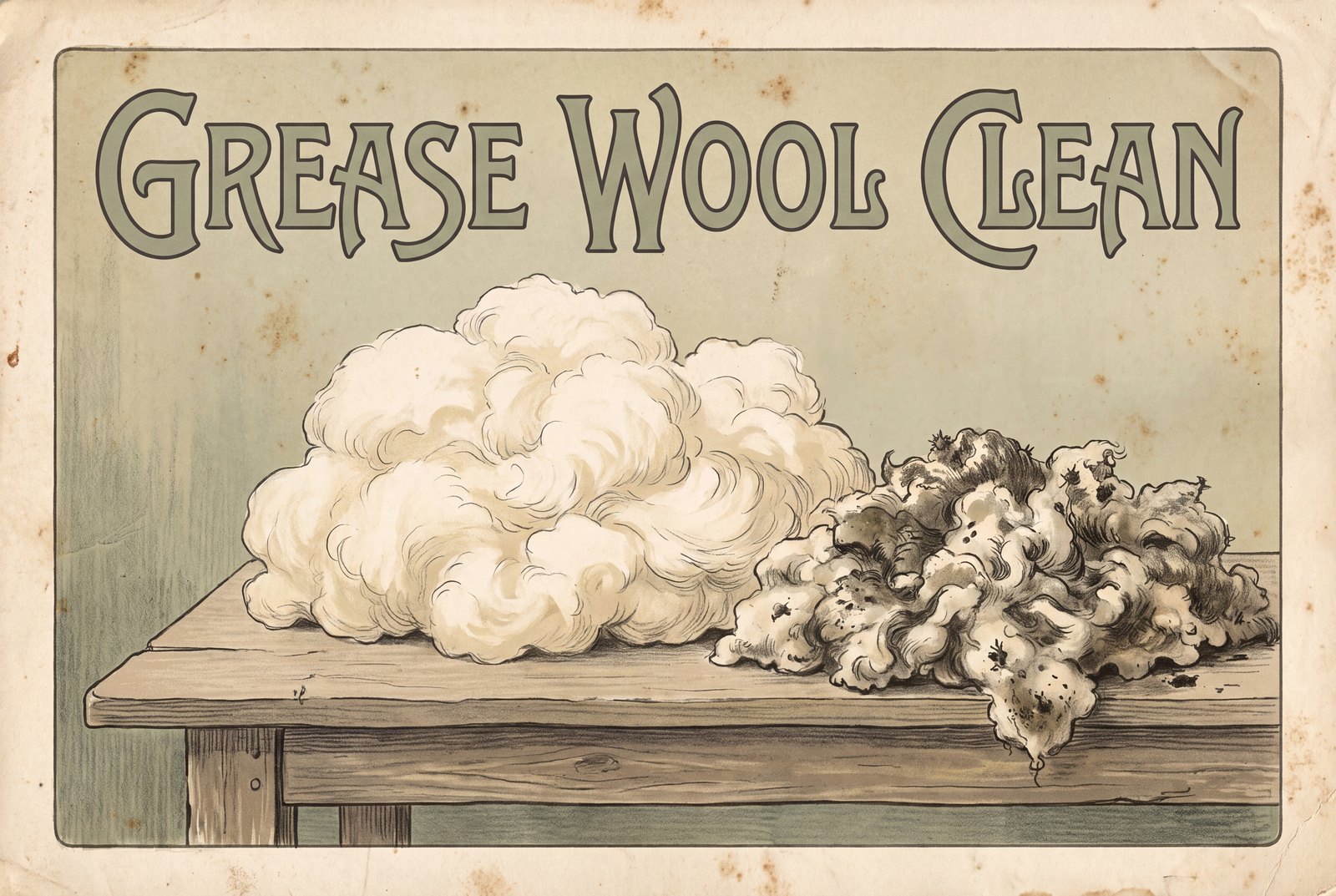
Every wool pillow starts as greasy fleece that has to be washed before you can sleep on it. Woolmark puts the grease, sweat salts and dirt in shorn wool at around 35% to 40% of the fleece's weight (Woolmark). The wash takes most of that out, but not all of it. What stays behind decides how much of the sheep's wax ends up under your head.
Short answer: Scouring washes raw fleece in warm, soapy water. It removes most of the lanolin, the wax a sheep's skin makes, along with dried sweat salts, dirt and plant bits. A trace of grease stays. A wool-testing bulletin says scours usually aim for 0.5% or less of residual grease (SGS). Several pillow sellers say about 1% of the lanolin is kept, but none we read said what that 1% is a share of. If your skin reacts to lanolin, ask before you buy.
This guide is for: people in the United States who have just bought a wool pillow, or plan to, and want to know what the washing did to the wool inside.
Key Takeaways
Three figures carry this page: how much of a fleece is not wool, how much grease scours aim to leave, and what sellers say they leave.
- Dirt, grease and sweat salts make up about 35% to 40% of a raw fleece's weight, according to Woolmark, so scouring takes out a large share of what was shorn.
- Wool scours usually aim to leave 0.5% or less grease on the washed fiber, per a wool-testing bulletin from SGS.
- We read 11 seller pages, and 6 gave a leftover lanolin figure. All six said about 1%, and none said what that 1% is a share of.
On This Page
Eight questions follow, in the order a buyer tends to ask them, from what is on raw fleece to how to check a pillow before you buy it.
What is on raw wool before it is scoured?
Raw fleece carries lanolin, dried sweat salts, dirt, sand and plant bits, and these can make up over a third of what the fleece weighs.
Wool fresh off the sheep is called greasy wool, and the name fits. According to Woolmark, shorn wool carries grease, which is mostly lanolin, plus suint, dirt, dust and sand. Lanolin is a waxy coating the sheep makes itself. It protects the fleece while the sheep wears it.
Suint is the second layer. It is the part of the coating that dissolves, and it consists largely of salts the sheep sweats out. It rinses out easily, which matters later.
The amount varies from farm to farm. Woolmark notes that the land and conditions where the sheep graze change how much dirt and grease a fleece carries. In our judgement, a dusty range gives a dirtier fleece than a wet green pasture.
The payoff for you is simple. The fill weight on your pillow's label counts clean fiber. With 35% to 40% of a raw fleece's weight being grease, salts and dirt, the wool in your pillow has already lost a large share of its starting weight before it was ever weighed out as fill. So the ounces you pay for are fiber you sleep on, with the dirt and sweat salts already gone. What was taken, and what was kept, is the subject of the rest of this page.
What does scouring remove from wool?
Scouring is a series of warm soapy baths that washes out most of the grease, the sweat salts and the dirt, but it leaves a thin trace of grease.
Scouring is the first wash wool ever gets, and Woolmark calls it the first mechanical step in processing. Most mills today use water, not solvent. Woolmark describes the wool being carried through a series of bowls, and says the first few hold warm water with detergent, which is where most of the grease and dirt comes out (Woolmark). Later bowls rinse.
Plant matter is harder to shift. Seeds and burs need a separate chemical step when there are many of them. Mills call this carbonising, and Woolmark says it is used only when a fleece carries a heavy load of plant matter. Holy Lamb, for one, says none of its wool is ever carbonized (Holy Lamb Organics).
| What is on raw fleece | What it is | What scouring does to it |
|---|---|---|
| Lanolin (wool grease) | A wax from the sheep's skin | Removes most of it; a trace stays |
| Suint | Dried sweat salts | Dissolves in the first warm baths |
| Dirt, dust and sand | Soil from the pasture | Removes most; a little may stay |
| Seeds, burs and grass | Plant bits caught in the fleece | Partly; heavy loads need carbonising |
Heat and rubbing clean wool, but you should know they can also tangle it. Heat and rubbing are also what make a wool pillow go flat and lumpy at home, covered in our guide on why a wool pillow felts and the handling that prevents it. A mill controls that risk with timing and gentle movement. You control it by following the care label.
How much lanolin is left after scouring?
Scours aim to leave half a percent of grease or less, so only a trace of lanolin, the sheep's own wax, stays on the wool under your head.
Scouring is not meant to strip wool bare. A wool-testing bulletin from SGS says scours usually aim for 0.5 % or less of residual grease, and less than 1.5 % of mineral matter (dirt). That is the industry's own target, and it comes with a clear basis.
Pillow sellers give a different number. Holy Lamb Organics says the wool retains 1% of the naturally occurring lanolin oil. Turmerry says approximately 1% of the lanolin is intentionally left in the wool after the scouring and cleaning process.
The SGS and seller figures may measure different things. The SGS number is grease left on the washed wool. A seller's "1% of the lanolin" could mean a share of the wool's weight. It could also mean a share of the lanolin the fleece started with, which would be far less. Neither seller page says which. This matters to you if your skin reacts to lanolin, because neither page tells you how much wax sits under your cheek. The table below is our reading of each source, not a claim any of them makes.
| Source | Figure stated | Basis stated on the page | Our reading |
|---|---|---|---|
| SGS wool-testing bulletin | 0.5% or less grease | Grease left on scoured wool | The only figure here with a clear basis |
| Holy Lamb product pages | 1% of lanolin kept | Not stated | Could be share of wool or of starting lanolin |
| Turmerry product page | About 1% left | Not stated | Wording reads as share of starting lanolin |
| Avocado help page | Lanolin removed | Scouring, no figure given | A claim of none, with no test figure shown |
Why do sellers leave some lanolin in pillow wool?
Sellers say a trace of lanolin keeps the fiber soft and springy; that is their claim, and no seller page we read cites a test for it.
The reason sellers give is comfort over time. Holy Lamb says its leftover lanolin conditions the fibers and keeps them fluffy and soft for years (Holy Lamb Organics). Turmerry says the lanolin it keeps conditions the wool (Turmerry). You will see some version of this reason on most pages that keep lanolin.
Other sellers keep less, or none. Woolroom says the wool is washed to remove any excess lanolin, the natural oil that protects a sheep's coat. At the far end, Avocado says lanolin is removed from its organic wool during scouring (Avocado). That page is about mattress wool, but its reason applies to pillows too: Avocado notes that some people are sensitive or allergic to lanolin, so a residue in a finished textile matters to them.
Here is our judgement, and it is only that. The spring in a wool pillow comes mostly from the shape of the fiber, the natural wave explained in our guide on why crimp makes wool work in a pillow. A trace of wax may help the fibers slide past each other. We found no seller page that shows a test proving it. So if you react badly to lanolin, you give up little by choosing wool with less of it.
Does unwashed wool make a better pillow?
Wool sold with its full lanolin coat carries far more wax than scoured fill, and we found no test showing it sleeps better for it.
Some sellers go the other way and keep most of the coat. When we read it, Home of Wool's page (since taken down) said its wool had not been washed with chemicals to remove its natural coating of lanolin. That wording left open whether the wool was rinsed in plain water. Dooley's Wool is another page in our count that says lanolin is kept. It gives no figure.
How much wax could that be? A lanolin producer, Lanis, says wool grease typically makes up about 10% to 15% of a shorn fleece's weight, depending on breed, season and wool quality. That is raw fleece, not any seller's pillow, and neither page says how much grease its wool still carries. Still, wool that keeps its coat can hold far more wax than the 0.5% scour target, and that wax sits inside the case you rest your face on.
Does more wax buy you a better night? In our judgement, the spring comes mainly from the fiber's shape. A careful scour leaves that in place. Wax may change how the fill feels in your hand. We found no seller page with a test showing that more lanolin gives you better sleep.
So the choice comes down to your skin. If lanolin has ever made you red or itchy, skip wool sold with its full coat. If it has not, pick by the feel and the care terms you can live with.
Where does the grease go after scouring?
The grease a mill washes out of your pillow wool is spun out of the wash water and refined into lanolin for soap and cosmetics.
The wax does not simply go down the drain. After the wool passes through the soapy baths, the used wash water holds the grease as an emulsion, according to a US patent on wool scouring. The same patent says the grease can be processed into lanolin and related products. It names soap and cosmetics as uses.
Most mills recover it with a spinning centrifuge. The patent describes a desludging centrifuge that gives a grease stream rich in lanolin. Recovery is partial. The Lanis page says a centrifuge gets back only about half of the available grease, so the rest leaves with the mill's waste, not with your pillow.
The lanolin in a jar of skin cream and the trace in your pillow start in the same wash. The difference is refining. Crude wool grease must be purified, alkali-refined and bleached before it is sold as lanolin, according to a paper in the Journal of the Society of Cosmetic Chemists.
What this means for you is practical. The trace on pillow wool is unrefined grease, not the purified product in a tube. Lanolin allergy is hard to pin down, and different forms may not affect the same person the same way. So tolerating a lanolin cream does not prove you will tolerate a pillow, or the other way round. If you are unsure, ask your doctor about a patch test.
What did we find when we read sellers' lanolin claims?
You can treat a seller's lanolin figure as wording, not a lab result: our count found two sources behind it and no stated method.
We read 11 seller pages on September 28, 2026, each one a product, help or FAQ page from a business selling wool bedding. We looked for one thing: what the page says about lanolin left after washing. We did not weigh or test any wool for this count. It covers only what the pages state, sorted into three buckets.
| Bucket | Pages | Which pages |
|---|---|---|
| Gives a leftover lanolin figure | 6 | Four Holy Lamb product pages, one Olympia Bed Store page, one Turmerry page |
| Says lanolin is kept or reduced, no figure | 4 | Woolroom, Dooley's Wool, Home of Wool, Frankenmuth Woolen Mill |
| Says lanolin is removed | 1 | Avocado help page (mattress wool) |
Six figures sounds like broad agreement, but it is closer to two sources. The Olympia Bed Store page repeats Holy Lamb's wording, saying the wool retains 1% of the naturally occurring lanolin oil. The four Holy Lamb pages share one paragraph. So the six figures come from two sets of wording.
No page in the first bucket said what the 1% is a share of. None named a test or a lab. None mentioned the residual grease target that wool-testing labs use. That gap is the finding. When you see "1% lanolin" on a pillow page, you are reading a seller's description. You are not reading a lab result. If the lanolin level matters to your skin, ask the seller for the test before you buy.
How can you check a wool pillow's scouring before you buy?
Look for a stated residual grease figure, a named scouring method, and a return window long enough to sleep on the pillow first.
Start with the lanolin figure, if the page gives one. Ask the seller what it is a share of, and whether a lab measured it. A seller who can answer that has probably seen a test report. One who cannot is repeating a line.
Next, look at how the wool was washed. Avocado names its method plainly: water and a gentle soap approved under GOTS, the Global Organic Textile Standard, with no acid or chlorine-based washes, at a GOTS-certified processing facility (Avocado). A named method tells you more than "natural" or "gentle" alone. For what GOTS covers on wool fill, see our guide on what makes a wool bed pillow organic.
A finished-product test is another useful sign. Avocado says the finished mattress is certified to OEKO-TEX® Standard 100 Class I and tested for residual substances (Avocado). A pillow can carry an OEKO-TEX label too. If yours does, you should find the certificate details on the page.
Last, check the return terms. Do this before you pay. You want enough time to sleep on the pillow for a week or two and still send it back. If you know you react to lanolin, lean toward wool sold as lanolin removed, and ask your doctor before relying on any seller's claim.
Common questions
Short answers to the questions people often ask about lanolin, washing, allergies and caring for a wool pillow once it is home.
Is lanolin the same thing as wool grease?
Yes, near enough. Woolmark describes wool grease as having lanolin as its base (Woolmark). Chemically it is a wax, and a lanolin producer lists wax esters as most of the crude grease that comes off the centrifuge (Lanis). When a seller says "lanolin" and a lab says "residual grease," they are talking about one coating, measured in different ways.
Can I wash a wool pillow at home?
Usually not, so check the label first. Holy Lamb's bed pillow page says plainly that the pillow is spot clean only (Holy Lamb Organics), and Naturepedic notes that most wool pillows are not machine washable (Naturepedic). Only machine wash if your label says you can.
I am allergic to lanolin. Can I use a wool pillow?
Maybe, but check first. A review of a century of medical papers found contact allergy from lanolin highly unlikely with modern wool garments; it did not look at pillows. Avocado notes that some people are sensitive or allergic to lanolin, the sheep's own skin wax, when it is left in a finished textile (Avocado). Ask the seller how much lanolin is left and how they know. Talk to your doctor before you rely on any product page.
Is wool itself an allergen?
The evidence says no. The same review in Acta Dermato-Venereologica found that current evidence does not suggest wool fiber is a skin allergen. It tied wool's itch to coarse fibers, about 30 to 32 microns across or wider. Pillow fill also sits inside a case, away from your skin.
Does putting a wool pillow in the sun help?
Several sellers recommend it. Holy Lamb says sunning the pillow now and then refreshes the wool (Holy Lamb Organics). Dry, moving air helps too. Treat any health claims about sunlight on seller pages as the seller's own view. Bring the pillow in before evening.
Does scouring make wool organic?
No. Organic status starts on the farm, with how the sheep are raised. Under GOTS the processing has to be certified too, which is why Avocado points out that its scouring happens at a GOTS-certified facility (Avocado). So a GOTS label also covers how the wool was washed. A plain scour with no certificate tells you nothing about the farm.
Sources
Here are the pages, papers and shops this wool guide draws on, each named beside the question it answers.
- Woolmark (woolmark.com), drawn on in “What is on raw wool before it is scoured?”; “What does scouring remove from wool?”; “Common questions”.
- SGS (sgs.com), drawn on in “How much lanolin is left after scouring?”.
- Holy Lamb Organics (holylamborganics.com), drawn on in “What does scouring remove from wool?”; “How much lanolin is left after scouring?”; “Why do sellers leave some lanolin in pillow wool?”; “Common questions”.
- Turmerry (turmerry.com), drawn on in “How much lanolin is left after scouring?”; “Why do sellers leave some lanolin in pillow wool?”.
- Woolroom (thewoolroom.com), drawn on in “Why do sellers leave some lanolin in pillow wool?”.
- Avocado (help.avocadogreenmattress.com), drawn on in “Why do sellers leave some lanolin in pillow wool?”; “How can you check a wool pillow's scouring before you buy?”; “Common questions”.
- Lanis (lanolin.com), drawn on in “Does unwashed wool make a better pillow?”; “Common questions”.
- US patent on wool scouring (image-ppubs.uspto.gov), drawn on in “Where does the grease go after scouring?”.
- Journal of the Society of Cosmetic Chemists (library.scconline.org), drawn on in “Where does the grease go after scouring?”.
- Lanolin allergy (en.wikipedia.org), drawn on in “Where does the grease go after scouring?”.
- Olympia Bed Store page (olybedstore.com), drawn on in “What did we find when we read sellers' lanolin claims?”.
- Naturepedic (naturepedic.com), drawn on in “Common questions”.
- review of a century of medical papers (pubmed.ncbi.nlm.nih.gov), drawn on in “Common questions”.
- review in Acta Dermato-Venereologica (medicaljournals.se), drawn on in “Common questions”.